
You’ve probably chatted with a bot before, maybe without even realizing it. It helped you reset a password, track an order, or even asked if you needed help just seconds after landing on a website.
But AI chatbots are no longer just helpful. They’re quietly reshaping how companies interact with customers across time zones, languages, and platforms. And they’re doing it with speed, consistency, and surprising personalization.
For business leaders, especially CXOs, service managers, and digital product owners, chatbots now carry strategic weight. They influence customer loyalty, operational costs, support team morale, and even how fast customers are onboarded into your ecosystem.
This article breaks down the benefits of chatbots in practical terms. Whether you’re exploring your first bot or upgrading an existing one, you’ll get a full-spectrum look at why these tools matter and how they fit into a smart digital customer experience strategy.
AI Summary
Customer expectations continue to rise, and businesses are under pressure to deliver faster, more personalized support without increasing operational costs. AI-powered chatbots have emerged as a key solution, helping organizations provide instant assistance, improve customer satisfaction, and scale support operations efficiently. This article explores the major benefits of chatbots in 2026 and why they have become an essential component of modern customer experience strategies.
Key Takeaways
Chatbots provide 24/7 support and reduce customer wait times.
AI-powered bots can handle high volumes of repetitive queries without increasing headcount.
Modern chatbots improve personalization by using customer context and historical interactions.
Faster response times lead to higher customer satisfaction and retention.
Chatbots help reduce support costs while allowing human agents to focus on complex issues.
AI agents can proactively engage customers, identify risks, and improve overall customer experience.
The greatest value comes when chatbots are integrated into broader customer support and success workflows.
Businesses that combine AI automation with human expertise are best positioned to scale customer experience in 2026 and beyond.
What Are Chatbots and Why They Matter in Customer Experience
A chatbot is a piece of software that mimics conversation. It can be rule-based (pre-scripted replies) or AI-powered (smart replies based on intent, data, and context). Not all chatbots are smart. Some are like Intercom’s Fin AI or Freshworks’ Freddy AI, using artificial intelligence to understand language, detect intent, and respond dynamically. Some are frustrating, even useless. But AI chatbots, the kind built with machine learning and NLP (natural language processing), can hold real conversations. They understand typos, context, and user emotions.
They’re embedded across channels:
Websites
Mobile apps
Messaging platforms (WhatsApp, Messenger)
Voice platforms (Google Assistant, Alexa)
Internal portals (IT helpdesk, HR systems)
In customer experience, their role is simple: they sit at the intersection of urgency and convenience.
Use case examples:
A new user lands on your website and doesn’t know where to start. The chatbot says, “Hi! Need help getting set up?”
A shopper on your mobile app can’t find their receipt. The chatbot pulls up their last 5 purchases instantly.
A returning customer asks about shipping delays. The bot explains the hold-up and offers a 10% coupon for the wait.
Behind the scenes?
These interactions trigger workflows, sync with your CRM, and feed into customer experience analytics, helping you refine journeys at scale.
That’s the kind of speed and consistency only chatbots can deliver.
Benefits of Chatbots for Customer Experience and Business Growth
We’ll now explore the core benefits of chatbots, broken into focused subsections to show the full business value.
1. Faster Customer Service with AI Chatbots
Speed is no longer a luxury. It’s an expectation.
Customers want answers now, not in five minutes, not tomorrow.
AI chatbots reduce wait times drastically by:
Instantly greeting users
Answering common questions
Handling FAQs without agent escalation
This alone improves customer experience and takes the load off your human support staff.
Average Response Times: Human vs AI Chatbots

Tools like Haptik.ai are built to handle millions of interactions simultaneously without compromising accuracy or tone.
Speed doesn’t just feel better. It reduces churn, improves satisfaction, and sets a brand apart.
2. Onboarding Automation for Seamless User Experience
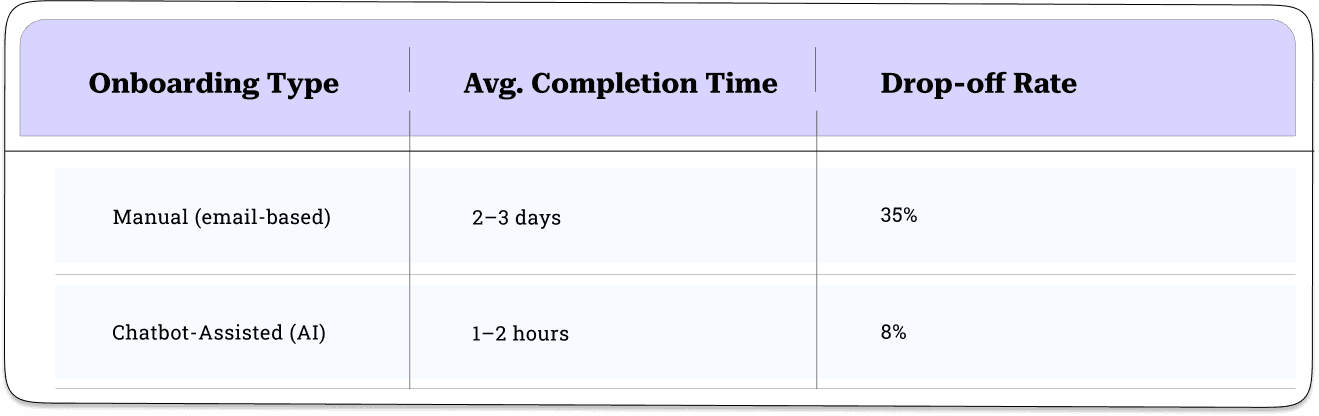
You don’t get a second chance at a first impression. That’s where onboarding automation via AI chatbots earns its keep. Whether you're onboarding users into a SaaS app or guiding customers through instructions, chatbots create momentum.
Example:
Fin AI by Intercom nudges users through account setup with context-aware prompts.
Freddy AI in Freshworks offers real-time onboarding assistance, guiding users through CRM setup or live chat rules.
When a user signs up:
The chatbot walks them through setup.
Offers tooltips or product tours.
Answers configuration questions instantly.
Schedules demos or follow-up emails, if needed.
This ensures a consistent experience, no matter what day or time a customer joins.
Typical Onboarding Time (Manual vs Chatbot-Assisted)
3. 24/7 Support Enhances Digital Customer Experience Strategy
Customer problems don’t follow your workday hours. AI chatbots extend your digital customer experience strategy by being available all day, every day.
Key advantages:
• Always-on support across time zones
• Better global engagement
• Helps small teams manage large audiences
And bots never get tired or overwhelmed, so your service's consistency remains strong.

4. Chatbots Reduce Costs and Factor in Customer Support Efficiency
When businesses look for ways to streamline operations, customer support often tops the list.
Why? Because support teams can be expensive. Hiring, training, shift scheduling. It all adds up fast.
Here’s where AI chatbots deliver serious value.
Instead of replacing human agents, they reduce the volume of simple, repetitive tasks:
• “Where’s my order?”
• “How do I reset my password?”
• “Is my subscription active?”
These questions take seconds for a bot but several minutes for a person. Multiply across thousands of customers, and the savings become clear.
Bots factor directly into smarter customer service strategies. They let human agents focus on what matters most: complex cases that need emotional nuance or specialized knowledge.
Cost Savings with AI Chatbots in Support Teams

5. Customer Experience Analytics Make Chatbots Smarter Over Time
One of the most overlooked benefits of chatbots is how much they can learn.
With customer experience analytics in place, your bot isn’t just talking; it’s collecting data:
• Which questions get asked most
• Where customers drop off
• What tone earns better results
• Which buttons or flows get clicks
This is gold for any customer experience specialist or product owner. It allows the team to:
• Refine scripts
• Optimize flows
• Predict user intent better
• Spot friction points early
The magic?
It all happens quietly in the background. The chatbot keeps improving without anyone needing to reinvent the system each time.
Feedback Loops That Power Customer Experience Analytics

AI-Bot Examples That Actually Improve Customer Experience
Let’s move from theory to real-world practice. These chatbot examples show how organizations from fashion to finance use conversational AI to create faster, smoother, and more personalized customer interactions.
H&M: Fashion Guidance, One Message at a Time
H&M’s chatbot helps shoppers find the perfect look. It asks users about their style preferences, then suggests outfits they can browse and buy. It's not just about answering questions; it's about inspiring action. For a fashion brand, that’s the sweet spot between support and experience.
Bank of America: Erica, the Financial Assistant
Erica is one of the most widely adopted banking bots, handling more than 1 billion interactions as of 2023. She helps users check balances, track subscriptions, and manage spending. The result? Higher engagement, lower support volume, and a tangible return on AI investment.
Atomicwork: Internal Chatbots for Employee Support
Chatbots aren’t just for customers. Atomicwork uses AI to automate internal help requests for IT, HR, and admin teams. An employee can ask, “How do I request time off?” and the bot will respond with the exact workflow. It cuts down on tickets and helps internal teams focus on meaningful work, a win for both productivity and morale.
Freshworks Freddy AI: Conversational AI at Scale
Freddy AI from Freshworks helps businesses deploy conversational bots across customer service, sales, and internal support. It’s integrated into tools like Freshdesk, Freshsales, and Freshchat, giving teams a unified way to handle routine tasks.
Key Features:
✓ Multilingual support
✓ Automated intent detection
✓ Seamless agent handoff
✓ Smart FAQs and live chat
Why It Matters:
✓ Freddy AI reduces response time to under 5 seconds
✓ Automates up to 60% of support tickets
✓ Learns from interactions to improve over time
Intercom Fin AI: AI-First Customer Support
Fin AI is Intercom’s flagship chatbot, and it’s all about fast, human-like responses based on your content, not generic rules.
Fin AI Benefits:
✓ Built using GPT-4 and real-time learning
✓ Pulls accurate answers from your help center
✓ Can escalate intelligently without loops
✓ According to Intercom, Fin can resolve 50% of queries on its own while maintaining a 90%+ customer satisfaction rating.
Live Use Case:
✓ SaaS companies like Notion and Airbase use Fin to:
✓ Shorten onboarding timelines
✓ Deflect high ticket volume
✓ Guide users through complex flows
Yellow.ai: Enterprise-Grade Chat & Voice Bots
Yellow.ai offers one of the most robust AI chatbot platforms, combining conversational AI with workflow automation. It’s widely used in retail, BFSI, and telecom sectors.
Highlights:
✓ Supports 135+ languages
✓ Works across voice, email, WhatsApp, and web
✓ AI intent training via low-code editor
Why It Stands Out:
✓ Yellow.ai chatbots deliver 92% accurate responses across platforms
✓ Reduced average handling time by 40% for large enterprise clients
Haptik.ai: Personalized, Predictive Assistance
Haptik.ai powers bots for ecommerce and telecom giants like Jio, KFC, and TATA. Its platform focuses on personalizing responses and integrating across CRMs.
Standout Metrics:
✓ 100M+ users served
✓ 80% automation in retail inquiries
✓ Custom chat flows with payment integration
Aisera (AISM): AI Service Management for Enterprise
Aisera goes beyond customer support. It offers AI-powered service management, meaning it automates IT tickets, HR requests, and customer issues alike.
Features:
✓ Natural language intent matching
✓ Integrated with ITSM tools (e.g., ServiceNow, Salesforce)
✓ Pre-trained on 200+ enterprise domains
CX Impact:
✓ Resolves up to 70% of IT issues autonomously
✓ Cuts service costs by 40–60% annually
Why Customer Experience Software Works Better With Chatbots
Most companies have some kind of customer experience software already. Maybe it’s a CRM like Salesforce, a help desk like Zendesk, or a messaging platform like Intercom. But those systems alone can’t keep up with real-time expectations.
That’s where chatbots come in. They don’t replace your software—they activate it.
Chatbots Connect the Dots
Imagine this scenario:
A customer visits your pricing page.
The chatbot greets them: “Need help figuring out the best plan?”
They type a question. The bot pulls their previous chat from Intercom, finds their usage data from Salesforce, and sends a personalized recommendation.
A transcript is logged in the CRM and shared with the sales team.
All this takes less than 30 seconds, and no one needs to refresh a page or switch tabs.
This is how modern bots integrate with tools like
Software Stack Synergy
Here’s what you should look for when picking chatbots that plug into your stack:

Customer Experience Gets Faster and Smarter
When bots work within your digital customer experience strategy, they reduce time-to-resolution and increase user satisfaction. Customers no longer must wait for responses or call centers. They get immediate help, and that builds trust.
How Customer Experience Specialists Use Chatbots and Analytics
A customer experience specialist wears many hats. They're part analyst, part journey designer, and part communicator. When chatbots enter the mix, they become even more critical.
Understanding What Works (and What Doesn't)
Using tools like Hotjar, Mixpanel, or Intercom’s own dashboard, specialists dive into customer experience analytics to figure out:
Where users drop out of conversations
What prompts lead to conversions
How often bots escalate to humans
Which replies get ignored or skipped
This feedback loop helps improve the bot’s tone, content, and flow. It’s not just about answering questions; it’s about doing it well and doing it better next time.
CX Specialist Impact Using Analytics

Internal Service Improvement with Atomicwork
On the internal side, Atomicwork lets specialists tag common requests and build conversational replies. For example:
VPN not working? The bot can walk a user through a quick fix.
Need new software access? The bot triggers a request for a ticket with all the required info.
This reduces IT backlog and improves response time, two big wins for internal customer experience.
Why It All Matters
CX specialists are the voice of the users inside your company. They translate frustration into improvement. With chatbots and analytics in their toolkit, they can:
Reduce friction in customer journeys
Personalize interactions at scale
Keep humans focused where empathy is needed most
As automation expands, the role of the CX specialist doesn’t shrink; it evolves. They’re the ones teaching bots how to behave, how to speak, and how to help.
You’ve now seen how bots operate in the real world and how they integrate across systems. But what about when things go wrong?
Next, we’ll ask the big question:
Can AI Chatbots Make Mistakes?
Let’s not sugarcoat it; yes, AI chatbots make mistakes. Just like humans. But here’s the catch: their mistakes are often easier to fix, monitor, and prevent on a scale.
The Most Common Chatbot Mistakes
Here are a few missteps chatbots still make:
1. Misunderstanding context
Sometimes a bot misinterprets a question because it lacks enough prior conversation or language nuance. For example, it may confuse “cancel order” with “cancel account.”
2. Failing to escalate properly
Poorly designed bots might keep looping users in circles instead of handing off to a real support agent. This is frustrating and entirely avoidable with clear escalation logic.
3. Over-personalization without permission
If a bot references information users didn’t know you had (like past purchases), it can feel intrusive. Bots should always respect privacy norms and data governance policies.
4. Inconsistent tone
Bots that mix formal and casual language too freely can feel jarring. Tone consistency matters, especially for brand trust.
5. Hallucination (AI-Specific)
In some cases, especially with LLM-based bots like GPT-4, the chatbot might “hallucinate” facts that sound right but aren’t. This is rare in domain-trained systems but still worth monitoring.
The Fix: Customer Experience Analytics + Human Feedback
Top platforms like Freshworks and Intercom allow customer experience specialists to:
Review failed conversations
Flag repeated “frustration loops”
Test flow changes without code
Track escalation rates to human agents
This means bots don’t have to be perfect on Day 1; they just have to keep learning.
Tools That Help Fix Chatbot Mistakes

So… Should You Worry?
Only if you treat your bot like a fire-and-forget tool. The real solution is simple: treat your chatbot like a team member. Train it. Review its performance. Iterate like you would with a sales or success rep.
And always, always build in a quick exit option:
“Want to talk to a human instead?”
That alone can improve satisfaction by up to 35%.
Building a Digital Customer Experience Strategy with Chatbots
Adding a chatbot to your website isn’t a strategy. It’s a tool. To make it work, you need to plug it into your larger digital customer experience strategy.
Here’s how to do it, step by step.
Step 1: Define the Customer Journey
Where are your users getting stuck?
When do they need guidance?
Use tools like Hotjar or FullStory to identify drop-off points and hesitation zones.
Your chatbot should support:
New user onboarding
Pre-purchase decision-making
Post-purchase support
Long-term engagement nudges
Step 2: Choose the Right Chatbot Stack
Your bot shouldn’t live in a silo. It should integrate with your broader CX ecosystem.
Partner ecosystems include tools built to connect bots across CRM, onboarding, and internal support. Make sure your stack includes:

Look for native integrations, API flexibility, and shared analytics.
Step 3: Map Intent to Interaction
Don't try to build one mega-bot that handles everything. Instead, break it down:
A sales bot should qualify leads
A support bot should deflect FAQs
An onboarding bot should help users complete key actions
Each intent should map to a flow. These flows should offer clear exits (like “talk to a human”) and link to resources like help docs or video walkthroughs.
Step 4: Set Clear KPIs for Chatbots
Bots aren’t just support tools, they’re business assets. Measure them like you would a team.

Connect this to your customer experience software or analytics platform.
Step 5: Layer in Customer Experience Analytics
No chatbot strategy is complete without customer experience analytics.
You should be tracking:
Chat open rates
Completion rates for onboarding tasks
FAQ deflection rate
Escalation rate to humans
Sentiment scores (where possible)
Platforms like Intercom offer built-in analytics. Others, like Mixpanel or Heap, can track behavior across tools.
Use these insights to iterate. Small changes, like rephrasing a prompt or adjusting timing, can lead to big improvements in engagement.
Step 6: Train Your CX Team, Not Just the Bot
A chatbot is only as effective as the humans managing it. Customer experience specialists should regularly.
Review chat logs
Identify language gaps
Update flows
Test new scripts
Tag common pain points
This hands-on feedback loop keeps bots from getting stale or annoying. It also helps your human support team understand what’s working and where to focus their energy.
Step 7: Measure Business Outcomes
Chatbots shouldn’t just be “cool”; they should show impact.
Look for:
Reduced time-to-resolution
Increased onboarding completion
Lower support costs
Higher customer satisfaction
More internal efficiency (if using tools like Atomicwork)
That’s when you know your digital customer experience strategy is paying off.
Conclusion: Why the Benefits of Chatbots Keep Adding Up
We’ve covered a lot, and for good reason.
Chatbots have evolved far beyond their “clunky-script” phase.
Today, they’re essential building blocks in any serious digital customer experience strategy. Whether you're handling customer support, onboarding new users, or even assisting your internal IT team, there's a chatbot model that fits.
Let’s recap the core benefits of chatbots:
They deliver instant, consistent, 24/7 responses.
They reduce ticket volume and free up your team.
They improve onboarding flow and customer retention.
They enable smarter personalization using real-time customer experience analytics.
· They integrate seamlessly with your existing customer experience software stack—especially when built on ecosystems like saasgenie.ai.
And most importantly? They don’t replace people. They amplify them.
With tools like Intercom and Atomicwork, businesses are seeing faster resolutions, better onboarding outcomes, and happier customers, all while scaling efficiently.
Ready to Get Started?
If you're a CXO, customer experience specialist, or technical leader, now is the time to evaluate how bots can boost your organization.
Start simple:
Audit your existing onboarding and support flows.
Identify repetitive, low-value tasks.
Test a chatbot integration.
Set KPIs and track performance using analytics tools.
Your customers are already used to talking to bots. The question is, are they talking to yours?
Optimize customer experience with fwdDeploy
The Future of Customer Experience Isn't More Headcount. It's Better Systems.
Chatbots have evolved from simple support tools into a critical part of the customer experience strategy. But the real advantage comes when AI is connected to your processes, data, and customer journey, not operating in isolation.
At fwdDeploy, we help post-sale teams design and deploy AI agents that reduce support load, accelerate resolutions, and create better customer experiences at scale. From support operations to customer success workflows, we build AI systems that deliver measurable outcomes—not just automation.
Want to see where AI can create the biggest impact in your post-sale operation?
Let's talk.